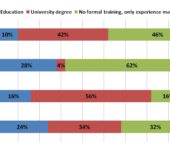
GeoWel Research, working with the Ministry of Economy and Sustainable Development recently published the results of a small pilot training/survey to look at employer staff needs in the four important sectors of tourism, apparel, ICT and food processing.
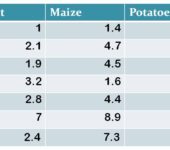
The presentation looks at the different reasons why agriculture is considered important in Georgia, in terms of employment, growth, security and poverty reduction. It also looks at Georgia’s untapped potential.
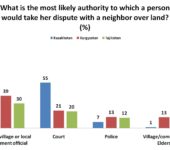
The research was the result of a large literature review and legal/institutional analysis, 1,908 survey questionnaires, 74 expert interviews and six focus groups conducted in Kazakhstan, Kyrgyzstan and Tajikistan, over 80 expert interviews from September 2010.
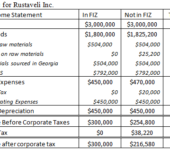
In order to better understand the costs and benefits of operating in the Poti FIZ, we calculated the overall impact on profitability of opening a medium-sized light manufacturing factory, fictitiously called Rustaveli Inc., inside the zone as opposed to outside the zone.
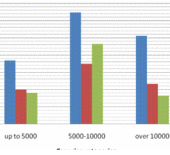
The profile of car imports into Georgia can tell us a lot about consumer confidence. In particular, it seems to suggest that confidence was not as significantly affected by the war as one would think, and may now be recovering.
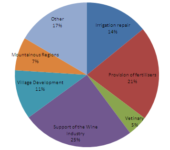
The Georgian wine market was dramatically damaged by the Russian wine embargo. The government response to this has been to aggressively promote Georgian wines abroad. Prior to the war there were some indications that this strategy was at least helping in the exports of relatively high-priced wines. It has, however, created two vulnerabilities.
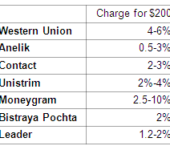
Remittances in Georgia are huge. If we only count the level of remittances sent using cash transfer systems like Western Union and Moneygram then remittances have grown from USD 259 million in 2004 to over USD 1 billion in 2008.
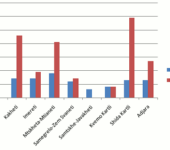
The World Bank’s Georgia Poverty Assessment, that was released in April of this year, offers many interesting insights into the patterns of poverty and social assistance in the country.