Rural Schools in Georgia: Devising Education Policy for a Depopulating Countryside
Policy paper
Key Findings
The education sector in Georgia has taken significant strides in recent years, but still faces a number of challenges at a system-wide level. Georgia’s rural schools in particular face a suite of more acute and interconnected problems. The issues faced by the education system in Georgia’s countryside are often hard to disentangle, first from each other, and secondly, from the general socio-economic and demographic realities of the country.
First, demographic trends in Georgia in recent decades have led to vast under-population in most rural schools. On average, a rural school serves just 37% of its enrollment capacity, meaning that the average rural school is about two thirds empty.In 249 rural schools there are ten or fewer students, and 17 schools have only one pupil. Cases when there is not a single student on a given grade level are routine, and this is why a number of schools have combined classes, so-called class-compacts, when students, in grades 1 through 4, study in a single room with a single teacher.
Second, schools in villages are inferior to urban ones from the infrastructural point of view. To analyze the infrastructural conditions of schools, we reviewed and aggregated data collected in 2018 and 2019 and provided to us by ESIDA with detailed studies of each of Georgia’s 2,233 public schools. Of the 276 schools that are listed as being in “replacement condition” in that database, meaning it is unfeasible to repair the school and a new building will have to be built, over 94%, or all but 16, are rural.
Third, with the outflow of population from rural areas, a trend that began following the collapse of the Soviet Union and continues today, schools face increasing challenges recruiting new, qualified teachers. Often, the whole teaching faculty of a school have been working there for over 20 years. For example, during the course of this research, when holding a focus group with the staff of a school in mountainous Adjara, all but one of the teachers had been employed there since the 1980s.
This connects with performance – village schools have consistently underperformed their urban counterparts in all of the general performance metric studies undertaken in recent years. Programme for International Assessment (PISA) and Trends in International Mathematics & Science Study (TIMSS) scores in Georgia show considerably lower results for rural students. Only around 10% of students in rural areas do well enough in school leaving exams to qualify for state financial support for university, compared to 27% in Tbilisi.
Finally, schools in villages in Georgia are often the only sources of formal employment for many locals. In this regard, schools are one of the only durable sources of village social life, monthly income and general social activity. Closing some of the almost empty schools and sending the pupils to fill up other local schools, a process known as consolidation, while plausible rationally, is questionable socio-politically.
This also means that policy on education vis-à-vis rural schools is always a part of general rural/urban policy, be it revitalization of rural areas, agriculture, larger scale infrastructure development (roads, natural gas access), or creating new employment opportunities country-wide to accommodate urbanization etc.
There is much the educational authorities can and should do to tackle the problems facing rural schools. In areas where it is relatively cheap to do so, all schools should be linked to the natural gas network. Making relatively inexpensive repairs to water systems will make a considerable impact on children’s and teacher’s conditions. Where possible, other services such as adult education and cultural activities should be incorporated into underused village schools, giving them extra functionality. Also, closing down some rural schools has to be an option in cases where schools are, at the same time, small, in bad infrastructural condition, and are likely to be used by fewer and fewer children in the future.
Related Articles:
Article | COVID deepens digital divide in Georgian schools
Article | Orphanage abuse scandal draws attention to Georgia’s religious schools
Related blog posts:
Involuntary dilemma of Georgia’s children: Labour vs Education
Can Georgia’s most vulnerable schoolchildren afford another year of online schooling?
Issues with school renovations
School overpopulation in Tbilisi
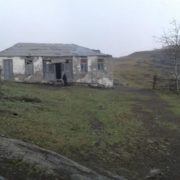
Illustration: Napilnari village Elementary School Building, Southern Georgia
Source: 2018-2019 public school infrastructure database compiled by GeoWel based on the data provided by ESIDA