
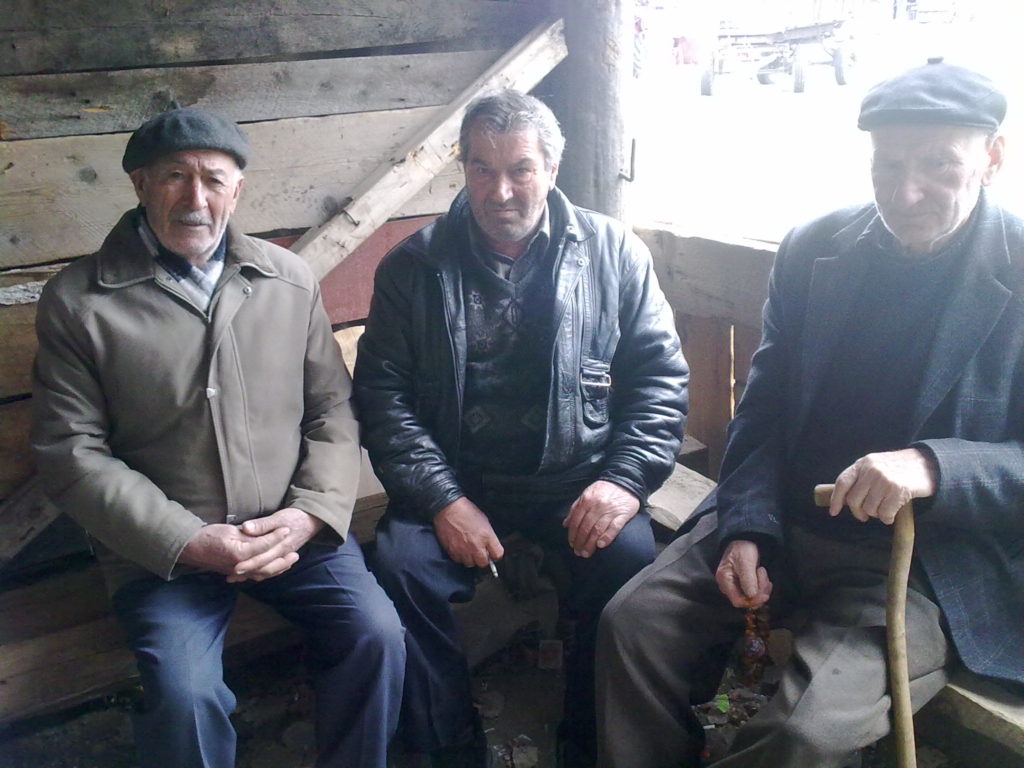
Local community members discussing impacts of BP’s projects
A bit of context
With accelerated economic development, it’s natural that more and more infrastructure projects are being built. Rapid industrialization brings new electric power plants, dams, roads, ports or even whole new cities. Strong environmental movements started to emerge throughout the world to counter rapid environmental degradation. The environmental movement became especially strong in the 1960’s United States, which led to adoption of the National Environmental Protection Act (NEPA) in 1969. This marked an important milestone in environmental protection, requiring for certain types of projects to evaluate environmental and social impact before commencing construction. In pre-NEPA days, infrastructure projects usually were mission oriented, meaning that, for example, the shortest route between two points were selected as a road route. Environmental or social impacts were hardly taken into account. After NEPA, many countries around the world followed the suit and Environmental Impact Assessment (EIA) became a standard legislative requirement. In many countries, legislation requires that EIA also includes Social Impact Assessment (SIA), although usually it is a small part of a long EIA document and rarely provides enough details.
Examples of social impacts may include resettlement, restriction of economic access, altering local culture, changing existing social networks, worsening the perception of well-being and so on. SIA was often defined as the process of ‘assessing or estimating, in advance, the social consequences that are likely to follow from specific policy actions or project development.’ However, prof. Frank Vanclay from the University of Groningen (my PhD superviser!) argues against such definition because it is too regulatory-bound. Prof. Vanclay argues (and many leading academics and practitioners in the field agree) that SIA is a continuous process, not just an outcome. As the social environment is constantly changing, it is important to follow and react to perceptions and feelings of local communities. Thus, ‘SIA is the process of analysing and managing the intended and unintended consequences of planned interventions on people so as to bring about a more sustainable and equitable biophysical and human environment.’
SIAs are increasingly widely used, usually as part of Environmental and Social Impact Assessment (ESIA) and are a cornerstone of the legislative requirements for evaluating big projects. As such ESIA is usually part of government planning applications as well as project development for donors and lenders.
If you want a very nice introduction into SIA, then probably the best place to start is the guidance document prepared by the International Association for Impact Assessment (IAIA).
So, what is SLO, why is it important and what did I research?
Current discourse on SIA rarely goes without a detailed discussion of SLO. The concept of SLO emerged predominantly from the mining sector in the 1990’s, but was extended to pretty much all industries since then. Put simply, the SLO approach looks at local communities to see whether and to what level they accept a project that directly affects them. The SLO concept is important as it puts local communities at the center of the decision-making process. No matter how big or important a project might be, it is important that local communities have a say. There is also growing evidence suggesting that disregarding the interests of local communities, on balance, will cost the companies more in the long run.
To earn a SLO, a project must have:
The objective of my PhD research was to assess whether it is a useful concept to apply, not only to large infrastructure projects, but also to ‘softer’ projects, like the ones that NGOs often implement. To address my research question, I used an expanded version of the Thomson and Boutilier model of SLO, which I tested on two infrastructure and two non-governmental projects in Georgia. The analyses of infrastructure project (BP’s oil and gas pipelines and Khudoni HPP) showed that there are specific actions that companies can employ in order to increase their SLO. In case of BP, it included demonstrating commitment to social development of impacted communities, helping local CSOs to expand monitoring skills and granting them access for effective monitoring, ensuring multiple channels of continuous interaction with local communities, and exposing project activities for scrutiny from internal and external stakeholders. On the other hand, the Khudoni HPP case showed that negligence of basic principles of SLO can lead to disastrous results. My further analyses of NGO cases showed how can the SLO framework be adapted to ‘soft’ projects and looked at the value the SLO approach might bring to NGOs and their beneficiary communities (by the way, one of my articles open access, so you can download it for free: ‘Social licence to operate through a gender lens: The challenges of including women’s interests in development assistance projects’ .
Criticism of SLO
The idea of social acceptance is very appealing both to local communities and project proponents, especially in sectors where risks for social conflicts are high (such as mining or oil and gas industry). There have been studies that show that low or no SLO can lead to project disruptions and immense financial losses. More importantly, such approach would leave local communities without fair treatment and due respect.
On the other hand, there is a risk that project proponents might use the SLO concept as another reputation management tool. This would be misunderstanding the core idea of the concept, as SLO is not about justifying the actions of a company, but it is about doing the right thing that would be fair to all parties involved. There have been concerns and criticism that project proponents might manipulate the concept to portray the project more useful to the community than it really is, or shift the discourse on less relevant issues. For such risks to be minimized and for the concept to be truly useful, it is important that local communities actively understand and utilize it, together with civil society organisations, academic institutions and practitioners in the field.
Do you think that applying SLO to projects in Georgia would be useful? In what ways could it make a difference for local communities or project proponents? Let us know what you think!