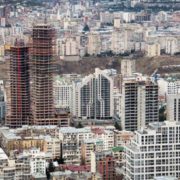
Georgian cities have been steadily growing in the last decades, but their school student population has been growing at an even faster rate: cities are becoming larger and younger year by year. For the last ten years, rural Georgians move to cities at an extremely quick rate, and this puts a particular strain on education and urban/rural development and planning policy. Let’s overview the situation and the policies government can (and does or does not) implement to address such rapid changes.
General Demographics picture
Georgia has been urbanizing through the 20th century until today, but the trend has particularly accelerated in the 2010s. The shift in the last decade was due to a combination of factors: the lack of jobs in villages; more economic activity in large cities, particularly Tbilisi and Batumi; and Georgian villagers moving directly to other countries for seasonal and/or permanent jobs. As a result, Georgian’s rural population has decreased by about 700,000 since 1994 on absolute and 5% in relative terms.
Most of those moving away from rural areas are younger people, leaving rural areas older. Indeed, in the last most detailed census, conducted in 2014, Georgia as a whole had an average age of 38.1, but in Tbilisi, home of around 30% of its citizens, the average age was lower, 36.3. It was significantly higher in more rural areas of Georgia: Racha-Lechkhumi and Kvemo Svaneti (48.2), Guria (41.8), Samegrelo and Zemo Svaneti (40.8) and Imereti (40.1).[1]
School Demographics (regional, rural/urban)
The number of students in Georgia’s schools has, unsurprisingly, largely followed the same trend. In 2013, schools educated less than 80% of the students they did at the turn of the 21st century, and whatever growth was seen after that was a function of the growth of the population in urban areas.
As seen, in terms of absolute numbers, schools in the period of 2009-2019 have actually lost about 32,000 students, but the 4 largest cities (Tbilisi, Batumi, Kutaisi, Rustavi) have gained about 45,000, and rural areas lost 43,000, a fifth of their students. Rural growth in school year 2020/2021 is connected to COVID-19: parents moved back together with their kids from urban to their home rural areas due to either loss of jobs or health and safety concerns in cities. As a result, total number of school students in villages grew by 15,000. This was the first year, barring a minimal growth in 2008, that the absolute number of students in rural areas have grown in independent Georgia.
As visible in the chart, in cities, the student population is growing at a faster rate than the population in general. In Tbilisi, the student body is 18% larger in 2019 (prior to COVID-19 quirk) as opposed to a decade ago, while the city at large has only grown by 6%. Kutaisi, Georgia’s third-largest city, which has been depopulating through Georgia’s independence, has actually gained school students while losing 15% of its population in the last decade. Rural areas, conversely, lost just 8% of their population in those years, but have a quarter fewer schoolchildren.
This means that the average number of schoolchildren in Georgia’s largest cities is growing and, trending up as opposed to the OECD average.[1].
All of this should mean that Georgian urban area should be adding schools to accommodate a large and growing school-age population. However, as we wrote in previous blogs that is not happening: citing lack of urban space for building new schools, Ministry of Education has not been building enough schools in the densest areas where most kids live. Tbilisi, home to 31.5% of Georgia’s population and about 35% of its school students, has added just three new schools in the last decade. Batumi has about 10,000 more students since 2019, but one less school in the same period (45 to 44). Rustavi has also added some 2,000 students but has seven fewer schools in 2019 (17% reduction) than in had in 2009. For this reason, over half of the schools in Tbilisi and about a quarter in Batumi and Rustavi have two-shift schools, which are harmful to children’s educational attainment.
As visible, average number of students has been growing in Georgia’s largest cities (the drop in Batumi in 2010/11 was due to administrative change in its boundaries resulting in absorbing surrounding villages, with their smaller schools, which drove down the average). Average Tbilisi school has 34% more students than in 2009, average Batumi school has 16%, and Rustavi 24% more.
Since 2017, the Georgian government and three of its agencies – Ministry of Education through its infrastructure arm, Ministry of Regional development through local municipalities, and Municipal Development Fund have cumulatively invested around GEL 350 million to renovate old schools and build new schools, of which around 180 million was spent on building 77 new schools. However, just 7 of those schools were built in urban areas. Of these 4 were in Tbilisi, 1 in Batumi, 1 in Kaspi and 1 in Marneuli. three of Tbilisi’s newly built schools were replacements of old buildings, which does not meaningfully expand student capacity. In total, these 5 schools in Tbilisi and Batumi have expanded the cities’ capacities by around 1,500 students.
Balancing urbanization and keeping life in rural areas around the country is key to Georgia’s economic development – be that agriculture, tourism, or local industries. Georgia has to, at the same time, expand its funding to build more urban schools to adequately house its expanding base of students, and at the same time, enhance and develop schools in rural areas to slow or prevent rural depopulation. Devising appropriate education policies to address these interconnected and at the same time, often contradictory issues is tricky politically, as it is connected with general social or regional government policy, of how the state sees the economic potential of the countryside and/or the pros and cons of urbanization.
[1] In OECD numbers, the average age for all schoolchildren is defined as until the age of 19. In Georgia, most students are done with general education by the time they are 18, so in this context, the average number of schoolchildren in Georgia’s cities is underestimated in comparison to OECD.
higher than before and higher than OECD average.
[1] 2014 Census of Georgia (summary). P8. http://census.ge/files/results/Census%20Release_GEO.pdf (last accessed August 18, 2021)