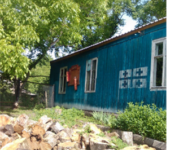
Georgia is a country proud of its tradition of inter-ethnic tolerance. Some 16% of the country’s population are ethnic minorities, mostly Armenians and Azerbaijanis, and government policy stresses the multi-ethnic, multi-cultural character of the Georgian state. According to Census 2014, Most of Georgia’s minorities live in rural, monoethnic settlements isolated from the rest of Georgian society, most obviously by language: 74% of native Azerbaijani speakers and 51% of native Armenian speakers do not speak Georgian fluently, which contributes to barriers existing for ethnic minorities in various aspects of public life, including public perception towards them.
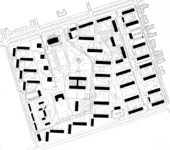
As we wrote in the previous blogs, about half of Tbilisi public schools are over their maximum capacity. Cumulatively, these schools have some 28,000 extra students. At the same time, other Tbilisi schools could take another 17,000 students. While there are still not nearly enough schools to accommodate all children in Tbilisi, there’s a large
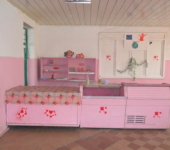
As we have attempted to document over this series of articles, the situation in the Georgian school system has seen tremendous improvements in recent years. But it has become apparent that there is one area where reforms have been seriously lacking, and where there is no clear plan to improve things: schoolchildren’s nutrition.
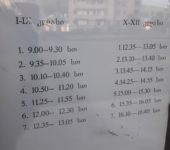
Tbilisi’s overcrowded school system uses two shifts to solve the problem of too many children per school. Around half of the schools in the capital have one part of the students study from 9 AM to 1 PM, and the next set of students start around 12-1 PM and end at 5 PM. (see illustration). What are the advantages and disadvantages of this system and how does it affect children going to these schools?
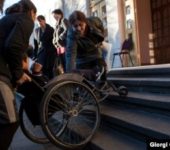
By working on inclusive education since 2004, Georgia has been making secondary education more accessible to students with special education needs (SEN) and disabilities. For a school to be considered “adapted” to meet the needs of disabled students, it has to have a ramp, an elevator, an adapted water closet, and classrooms and resource rooms
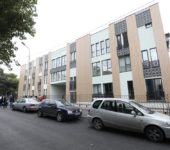
In-country migration in Georgia has led to considerable movement of people and especially younger people towards its capital, Tbilisi: it now has 40 thousand more students than ten years ago. Can the capital’s general school system accommodate these kids? Where do they go to study? Georgia has been urbanizing rapidly through last hundred years, but
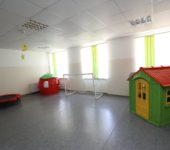
The decision elicited criticism, in particular as bars, restaurants, and tourism infrastructure remain open.
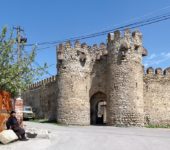
A heavily publicized child abuse scandal in a Georgian church-run orphanage has brought renewed scrutiny to the country’s residential institutions for children, which continue to operate despite long-running efforts to phase them out.
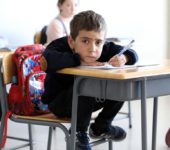
Poor and rural families are not equipped to handle online school. Now they fear another academic year is going to start with schools still closed.
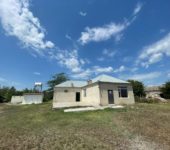
How should Georgia deal with its smaller, struggling public schools? GeoWel visited the village of Mukhrani to look at an interesting study case of a struggling small school, fighting for its existence and relevance.