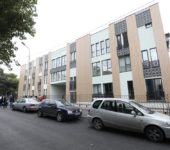
In-country migration in Georgia has led to considerable movement of people and especially younger people towards its capital, Tbilisi: it now has 40 thousand more students than ten years ago. Can the capital’s general school system accommodate these kids? Where do they go to study? Georgia has been urbanizing rapidly through last hundred years, but
The decision elicited criticism, in particular as bars, restaurants, and tourism infrastructure remain open.
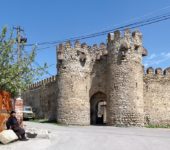
A heavily publicized child abuse scandal in a Georgian church-run orphanage has brought renewed scrutiny to the country’s residential institutions for children, which continue to operate despite long-running efforts to phase them out.
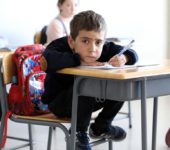
Poor and rural families are not equipped to handle online school. Now they fear another academic year is going to start with schools still closed.
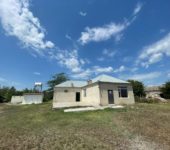
How should Georgia deal with its smaller, struggling public schools? GeoWel visited the village of Mukhrani to look at an interesting study case of a struggling small school, fighting for its existence and relevance.
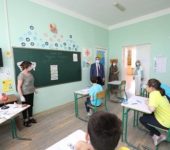
Fifteen years ago, Georgia took the decision to radically change its approach to children with special educational needs (SEN). The change led to the abandoning of decades of Soviet and post-Soviet practice that saw children with severe needs were either educated in separate, often inadequate institutions, or just kept at home. Children with less severe needs, meanwhile, were left to go it alone in regular school with no extra support. From 2004, the country embarked upon a journey to create an inclusive learning environment for all children.
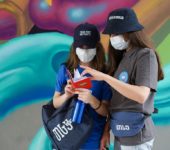
Most of the cheaters were first-year students, who because of the COVID-19 pandemic were forced to start their college experience remotely. Tsotskolauri said the problem only got worse as the year progressed, as he played a game of whack-a-mole with students’ increasingly pervasive and elaborate cheating schemes.
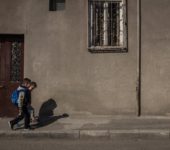
On leaving office in 2013, Georgia’s former president, Mikheil Saakashvili, remarked that if he’d spent as much of the state budget on the country’s education system as he had on the armed forces, Georgia would be in a much stronger position today. Eight years later, in 2021, Georgia’s education spending is double the defence budget,
On June 10 we presented the preliminary results of our research at a webinar on “COVID-19 impact on Georgia’s general education system: Educational losses.” (video in Georgian). The presentation was followed by a discussion with teachers and students’ parents.

On June 10th a webinar on COVID-19 Impact on Georgia’s General Education will be held online. GeoWel Research will present preliminary findings of the research and discussion with various stakeholders will follow on challenges caused by the pandemic and the recommendations to remedy their impact. The webinar is a part of the Georgian Educational Advocacy